Lapse
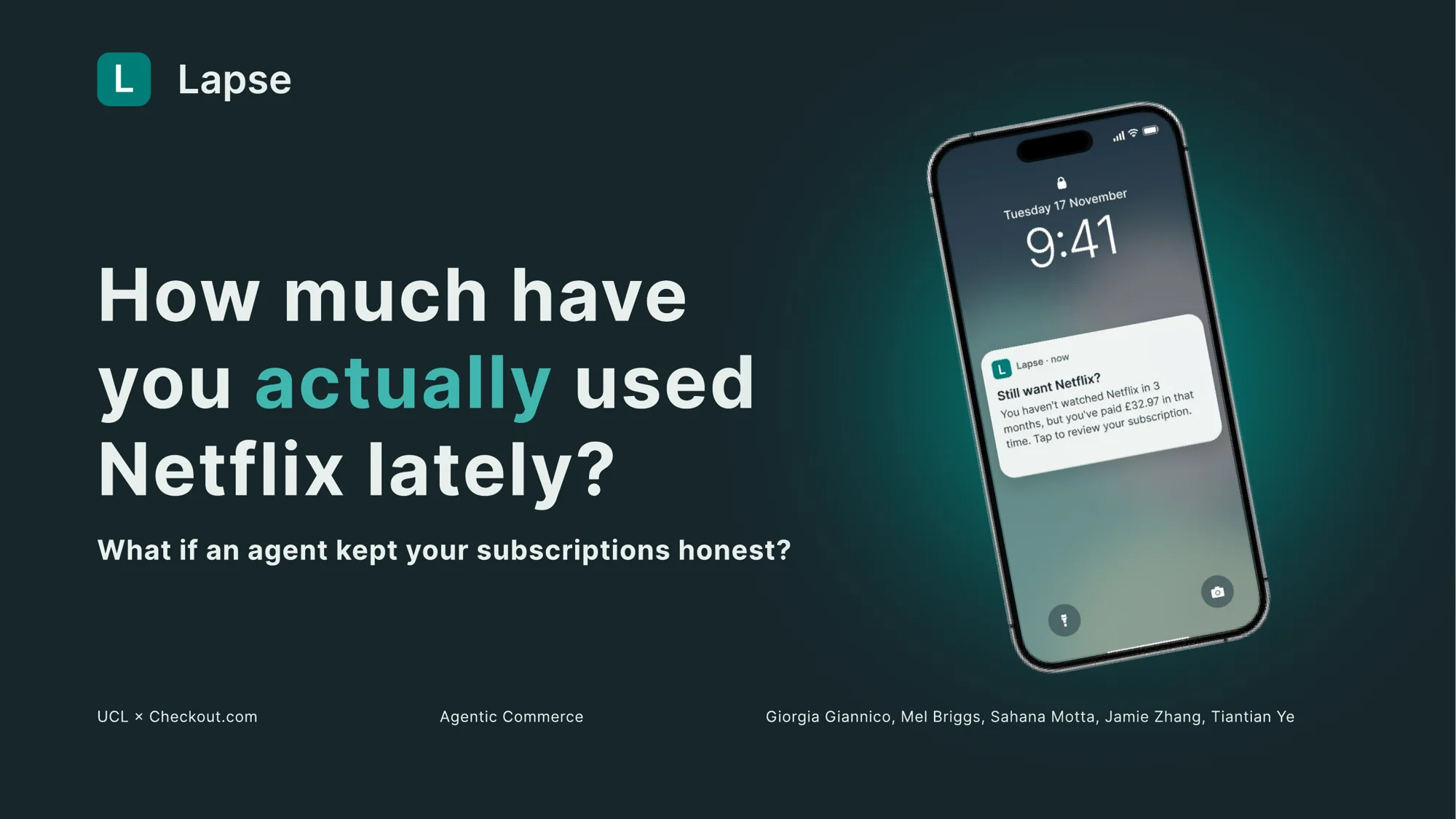
An AI agent that notices the subscriptions you've stopped using, and cancels them only if you say so. A UCL industry project with Checkout.com.
- Context
- UCL × Checkout.com industry project
- Theme
- Agentic commerce
- My role
- Survey research, design iteration, evaluation, report
- Team
- 5 people · 2026
The problem
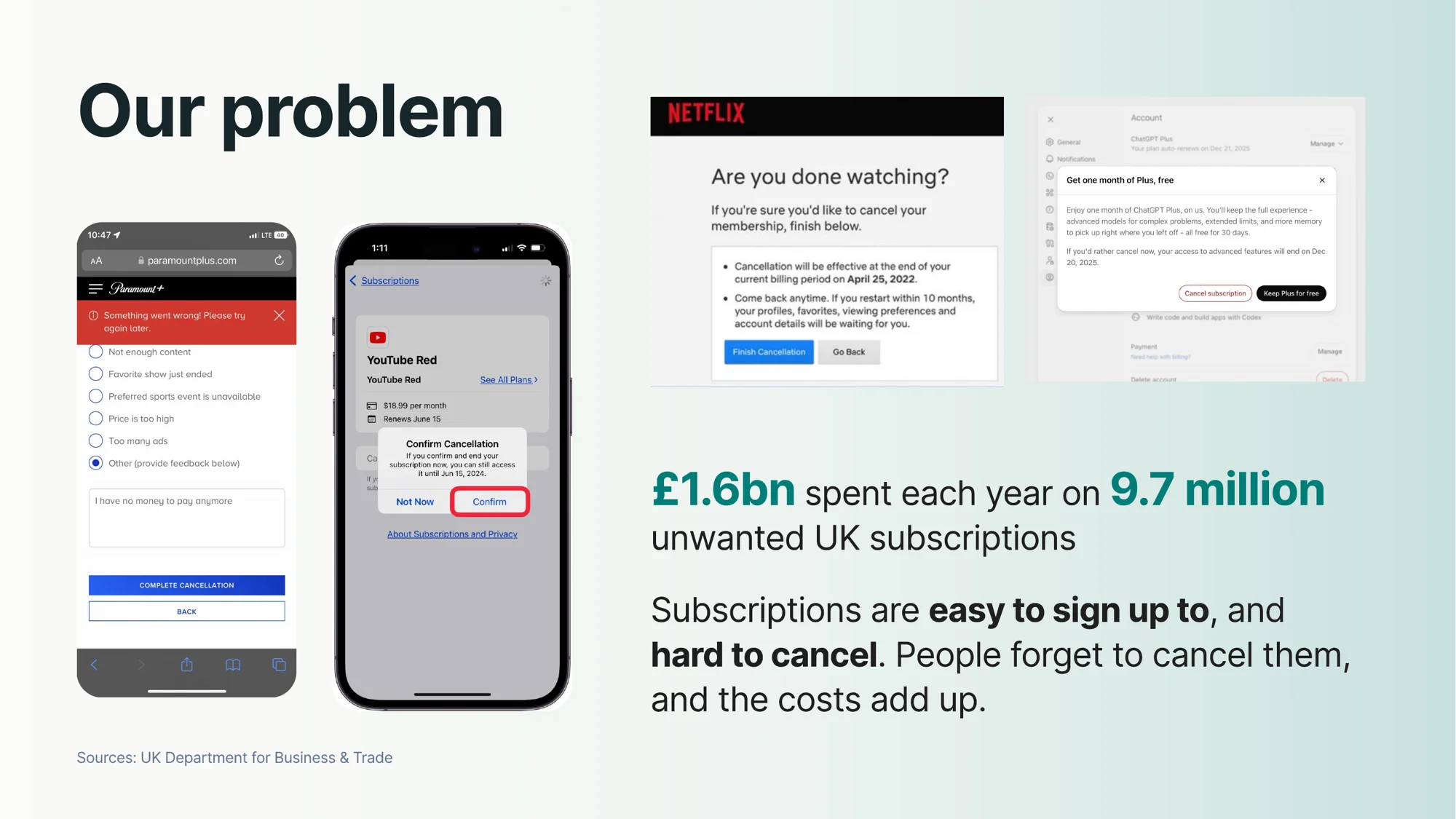
Subscriptions are easy to sign up to and hard to cancel. People forget about them, and the costs add up: an estimated £1.6bn is spent each year on 9.7 million unwanted UK subscriptions (UK Department for Business & Trade). Cancellation flows don't help, with guilt-trip questions, last-minute discounts and confirmation screens designed to make you stay.
Research
I ran a quantitative survey in Qualtrics on people's subscription habits and how much they would trust an AI agent to act for them. The results made the problem personal:
100%
were charged for something they forgot about in the last 12 months, 40% more than once
60%
lost over £10 on subscriptions they forgot about
80%
had a free trial turn into a paid subscription
Why now
- Agents can act. 3% of transactions already involve AI agents, according to 400 UK and US merchant heads of payments, and 89% are preparing for more.
- The law is changing. The UK's DMCC subscription rules, coming in 2027, require reminders, an easier exit and a 14-day cooling-off period.
- Users want control. People want agents to save them time and money, but aren't ready to let them act alone.
Existing tools like Rocket Money, Emma and Snoop track recurring payments and point you to the provider. Our opportunity was to connect payment and usage signals, recommend a cancellation, get the user's approval, and then follow through.
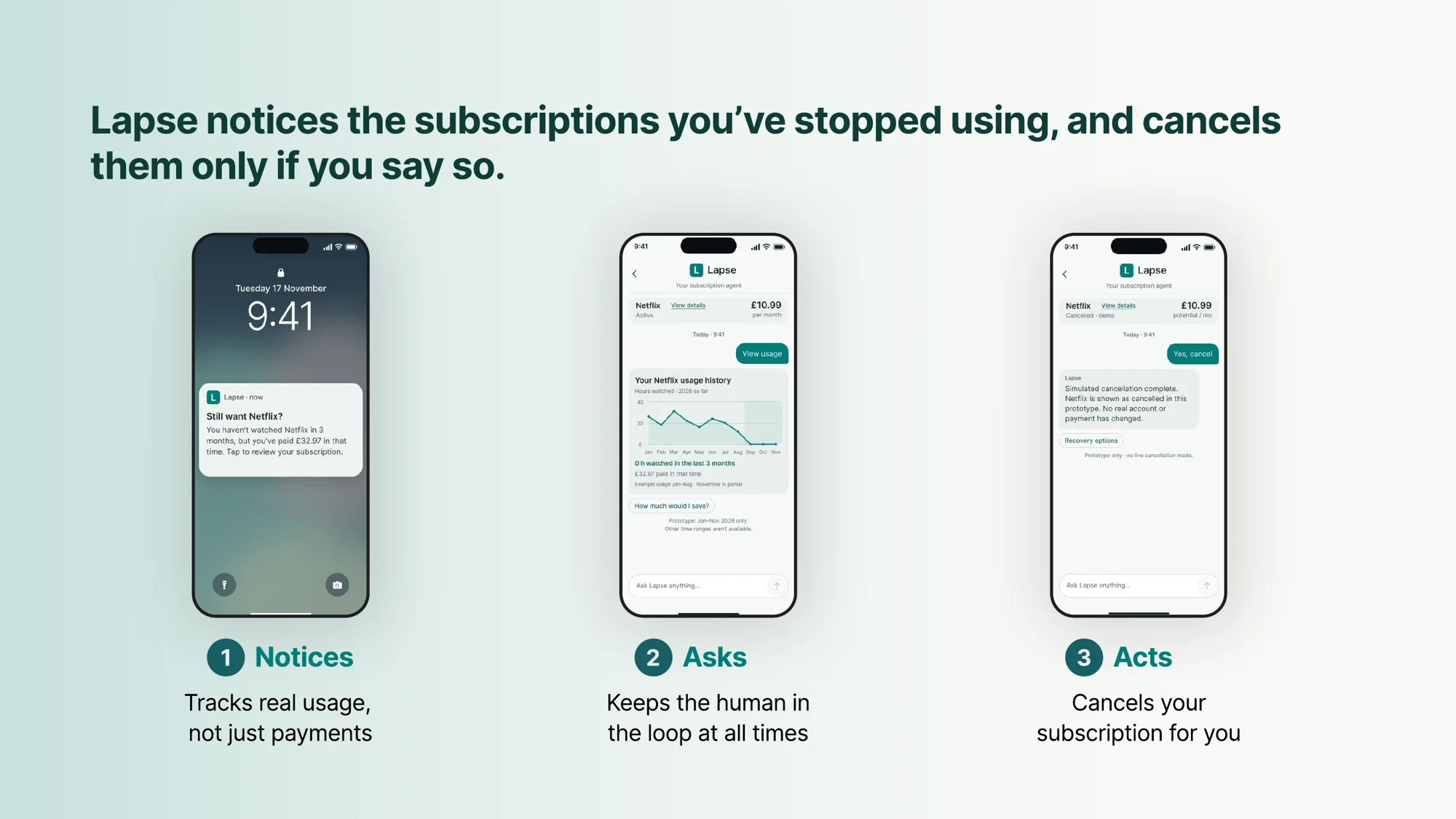
Lapse notices the subscriptions you've stopped using, and cancels them only if you say so.
Designing how much the agent can do
From the survey findings I defined three design requirements for an agent that cancels only with the user's approval, and we iterated on three designs with different levels of agent autonomy. The final design works in three steps.
The walkthrough
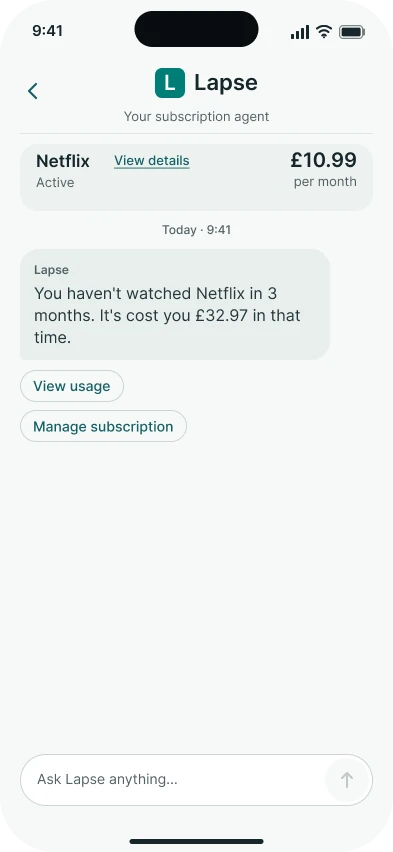
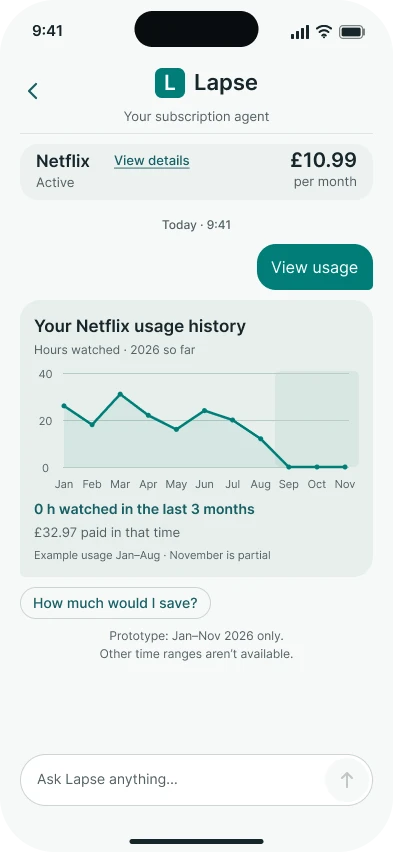
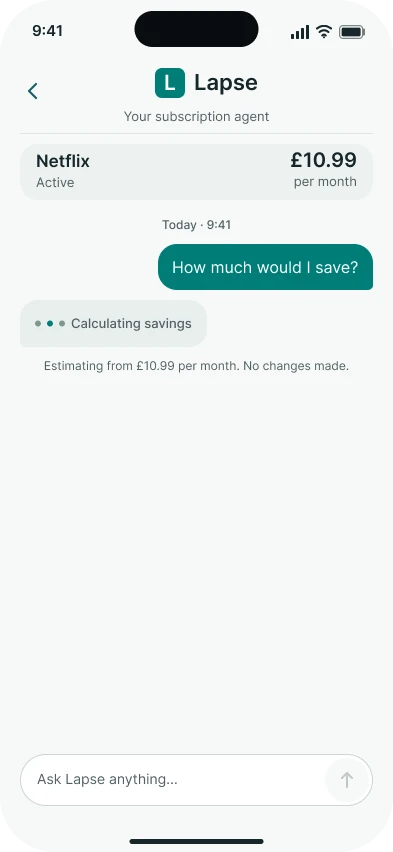
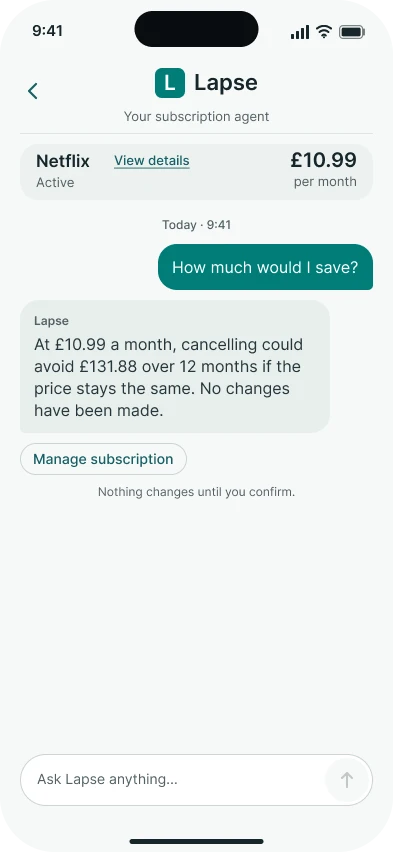
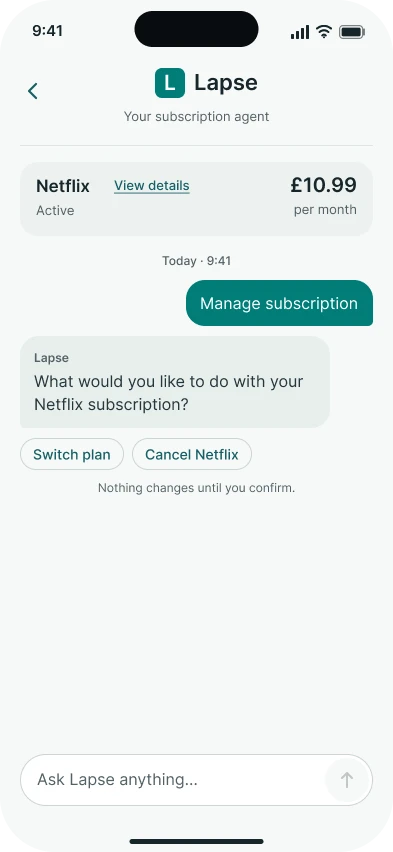
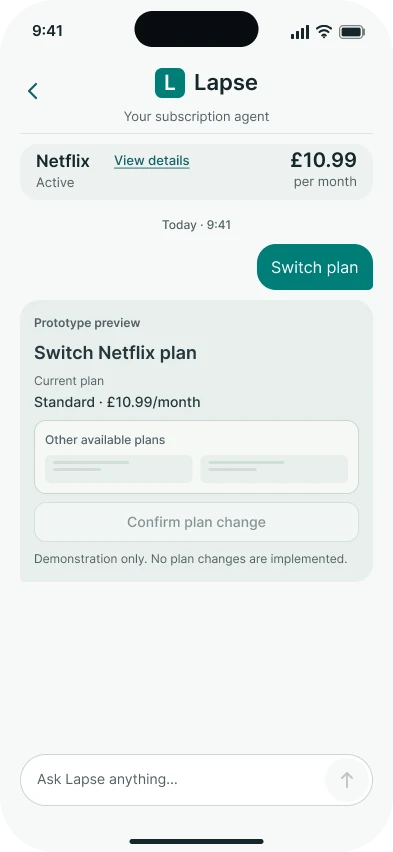
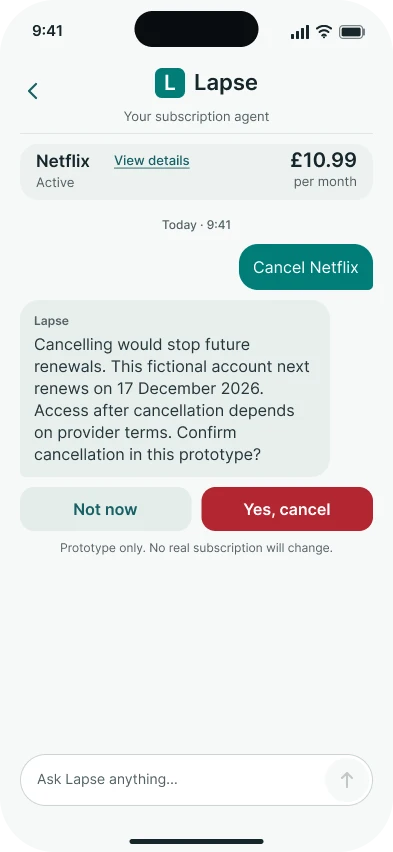
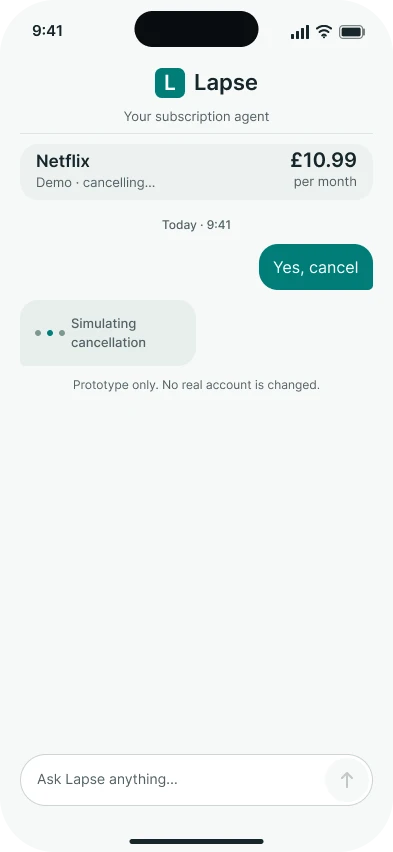
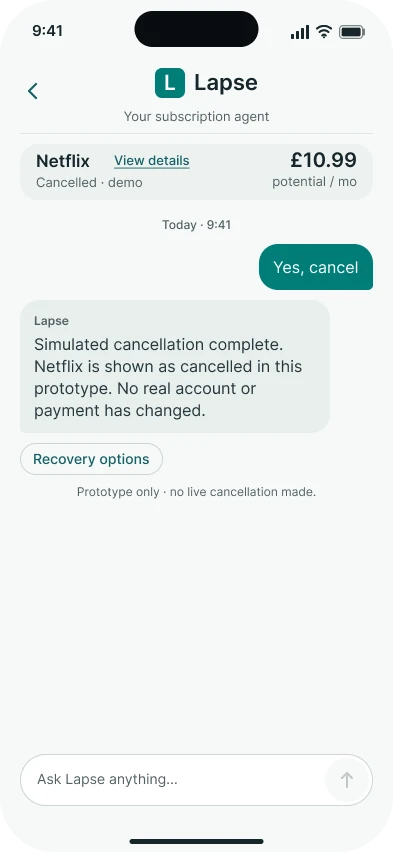
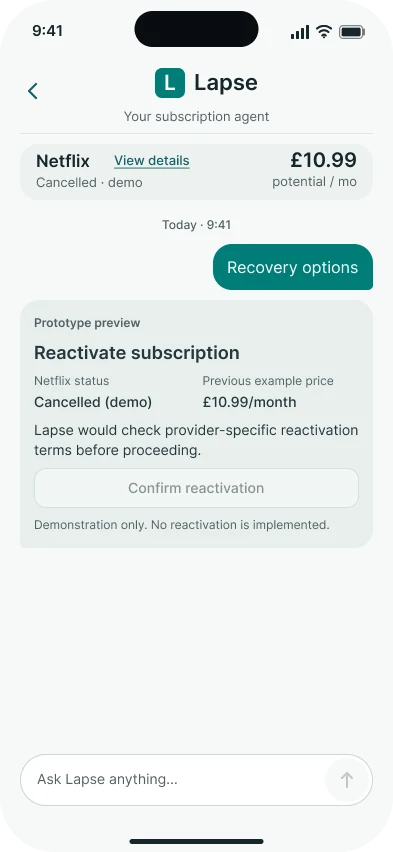
Step 1 of 11
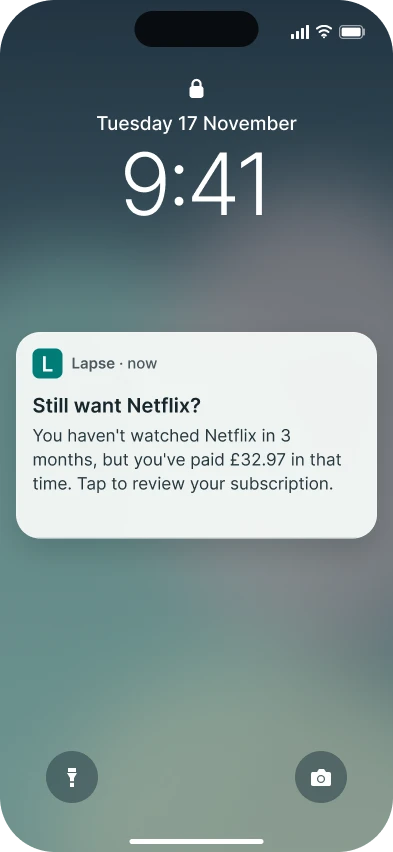
A nudge, not an action
Lapse notices three months without watching Netflix, and asks rather than acts.
The service ecosystem
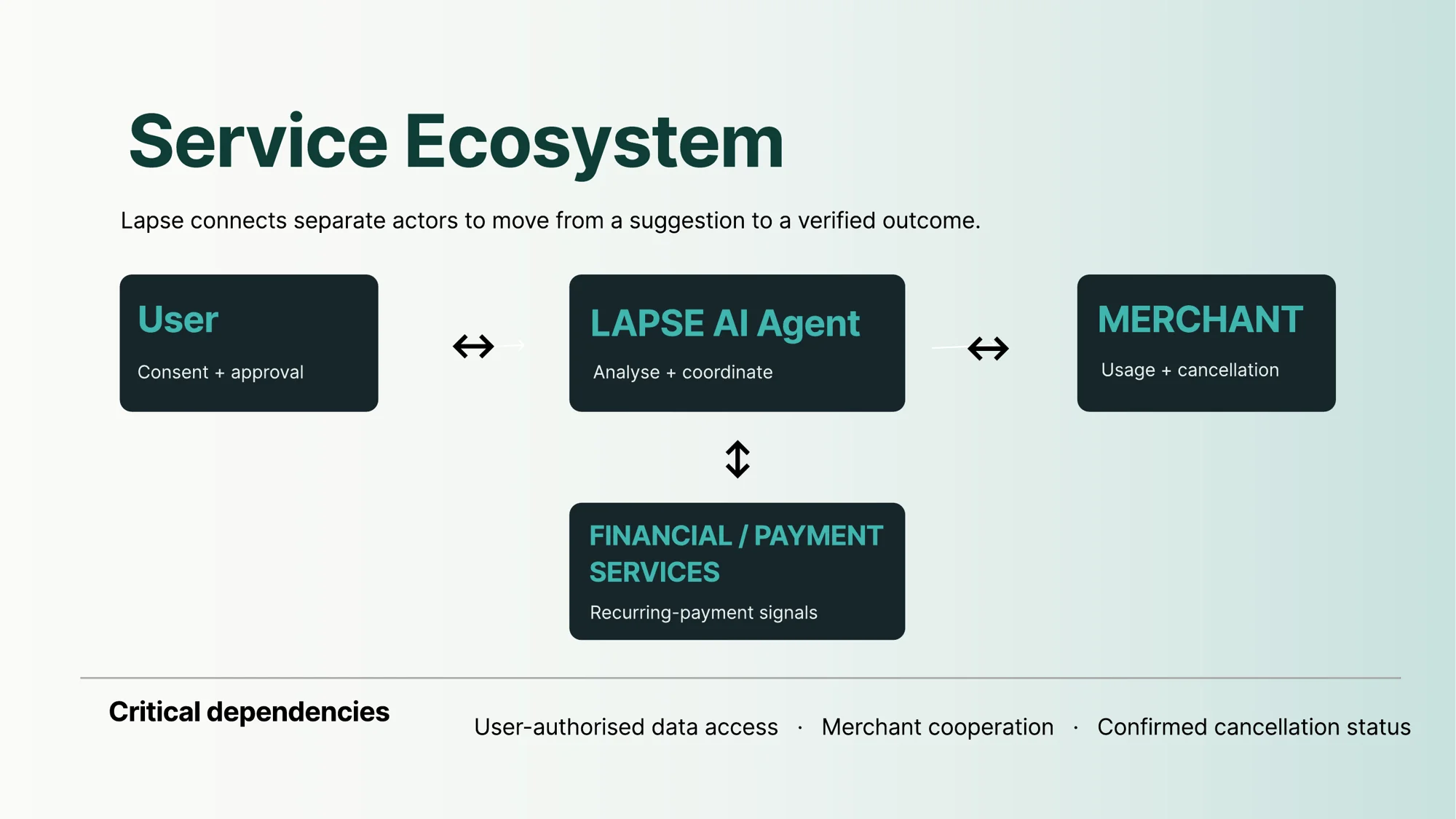
Lapse only works by connecting separate actors: the user gives consent and approval, payment services provide recurring-payment signals, merchants provide usage data and carry out the cancellation, and the agent analyses and coordinates between them. It depends on user-authorised data access, merchant cooperation and a confirmed cancellation status.
Evaluation
We evaluated the walkthrough prototype against Amershi et al.'s 18 Guidelines for Human-AI Interaction (CHI '19).
What works: Lapse asks for consent before cancelling, explains every flag with usage data, shows the consequences before cancelling, makes mistakes easy to undo, and lets users correct it in free-text chat.
What we'd improve: an overview of all subscriptions (Lapse shows one at a time), a proof-of-cancellation receipt in case of disputes, and showing users exactly what data Lapse monitors.
The open question we'd test next: how much monitoring will people accept in exchange for savings?
AI identifies. Humans decide. Services act.
Team
Designed with Mel Briggs, Sahana Motta, Jamie Zhang and Tiantian Ye as part of the MSc in Human-Computer Interaction at UCL, in partnership with Checkout.com. I co-authored the team report.